
Demand for ETH Staking Surges as Entry Queue Doubles Exits

Ethereum's validator entry queue has overtaken its exit queue for the first time in six months, with new staking requests now exceeding withdrawal demands by more than 2.5 times. The shift marks a notable reversal in network activity, as institutional buyers and protocol improvements converge to drive renewed confidence in network participation.
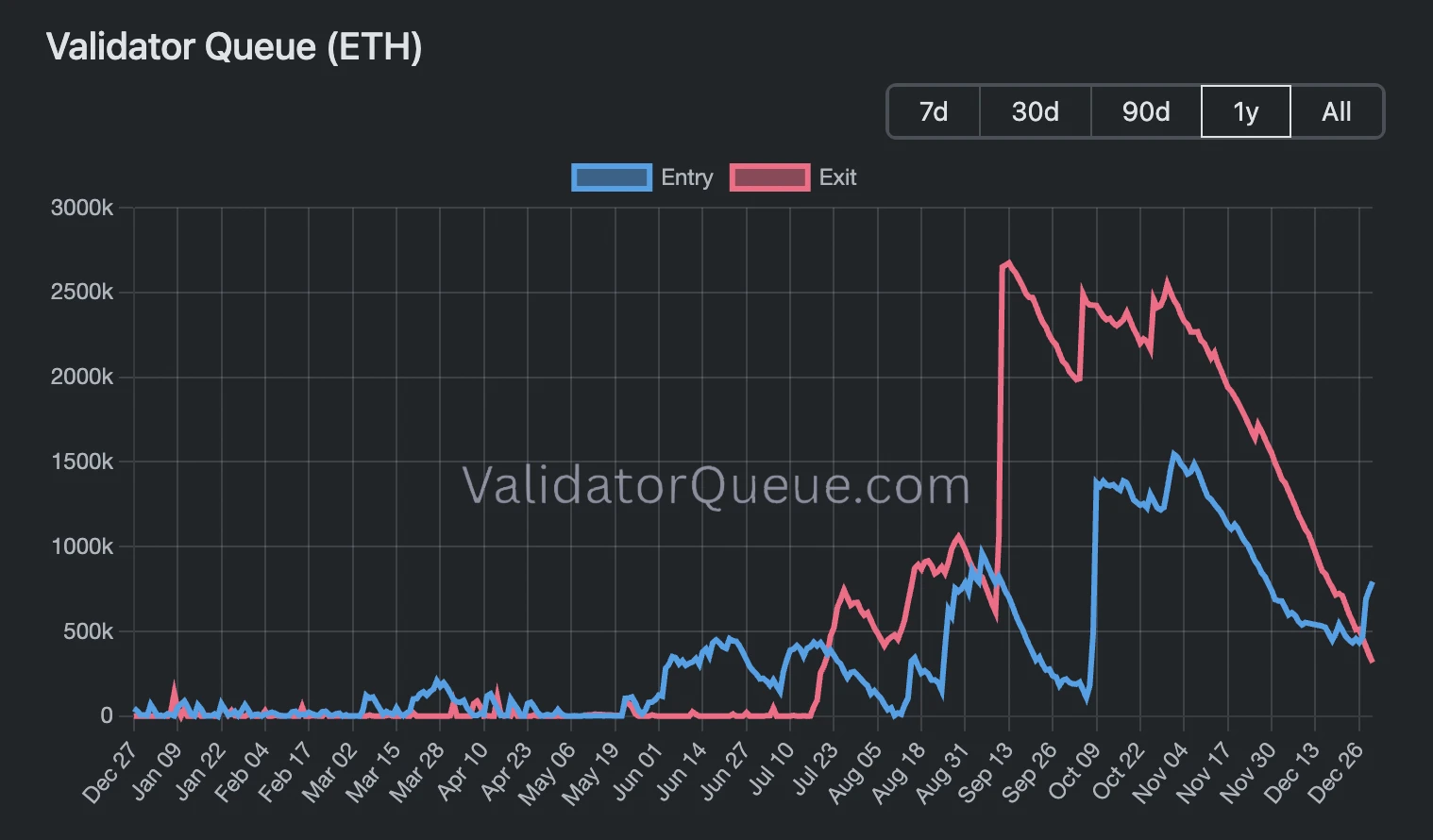
As of December 30, approximately 774,000 ETH ($2.3 billion) awaits entry into the validator set, compared to 294,000 ETH ($880 million) queued for exit. The entry queue expansion began around December 27 and has accelerated rapidly, while exit requests have declined to four-month lows.
What is The Ethereum Validator Queue?
Ethereum's proof-of-stake network employs entry and exit queues to manage the flow of validators joining and leaving the system. These queues exist because the network limits how many validators can be activated or deactivated per epoch through a mechanism called "churn," which processes 256 validators every 6.4 minutes.
When demand to stake exceeds the network's processing capacity, ETH enters a queue with wait times that fluctuate based on activity levels. Currently, new validators face a thirteen-day wait, while those exiting can withdraw in approximately five days. The queues serve as rate limiters that protect network stability and prevent rapid shifts in validator composition.
Staking itself requires validators to lock 32 ETH, reducing circulating supply. Exit requests typically signal intentions to free capital for sale or reallocation, making queue dynamics a useful indicator of market sentiment and supply flows.
Tides are Changing…
The current entry queue dominance represents a sharp departure from trends that persisted through most of 2025. Exit requests significantly outpaced entries from July through December, reaching peak levels in early September.
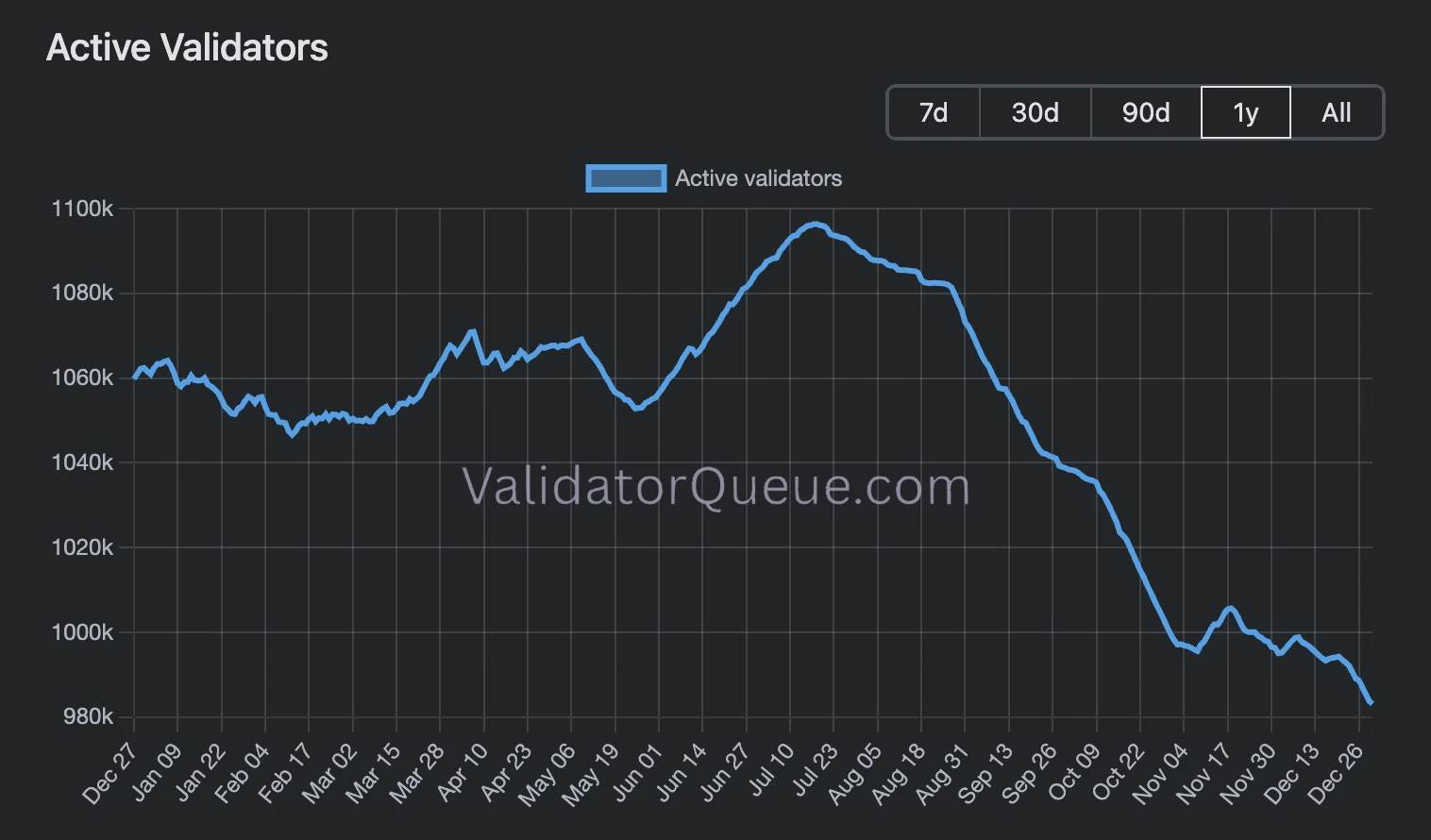
The validator count itself declined throughout the second half of the year to levels not seen since mid-2024.
The reversal began December 27/28, when both queues stood between 4-500,000 ETH. Since then, entries have surged while exits have contracted steadily. Abdul, head of DeFi at newly launched layer-1 blockchain Monad, noted on December 28 that the last time entries exceeded exits was in June, after which… ETH doubled in price.
Digital asset treasury firm BitMine has emerged as a dominant buyer, staking 342,560 ETH over two days in late December, valued at approximately $1 billion. According to Abdul's analysis on December 24, BitMine has absorbed roughly 70% of unstaked ETH since July and now controls well over 3% of total supply. The firm reportedly holds an additional $1 billion in cash earmarked for further ETH purchases.
What Does it All Mean?
Several factors appear to be driving the queue reversal.
The Pectra upgrade, implemented only recently, raised maximum validator limits and simplified staking for large balances. This allows institutions to deploy capital more efficiently without fragmenting holdings across multiple 32 ETH validators.
DeFi market conditions have also made a contribution.
Ignas, co-founder of DeFi Creator Studio Pink Brains, explained on December 27 that increased borrow rates on Aave forced unwinding of leveraged stETH positions. As these loop strategies closed, ETH returned to direct staking rather than remaining in DeFi protocols or circulating supply.
Abdul estimates approximately 5% of total ETH supply changed hands between July and December through validator exits and subsequent absorption by institutional buyers.
If current trends continue, the exit queue could reach zero by early January, potentially reducing sell pressure on ETH. Meanwhile, the growing entry queue suggests validators are positioning for longer-term participation, tightening liquid supply as more ETH becomes locked in staking contracts.
However, observers note that staking does not permanently remove ETH from circulation (validators can eventually exit and unlock their holdings). In this respect, the 13-day entry wait and multi-day withdrawal process create temporary supply constraints rather than permanent reduction.
As a closing note, some analysts, Ignas included, have speculated the institutional staking activity may indicate positioning ahead of potential spot ETH staking ETF products, though no such instruments have received regulatory approval.
Sources
- Validator Queue: Official Website
- MoneyCheck: Ethereum Staking Entry Queue Nearly Doubles Exit Queue as Demand Rises
- The Coin Republic: Ethereum News: ETH Staking Entry Queue Doubles Exit Queue
- CoinMarketCap: Ethereum (ETH)
- Ethereum: Ethereum Roadmap > Pectra
- @0x_Abdul: Social Media Commentary
- @DefiIgnas: Social Media Commentary
[Disclaimer: The content of this article is intended for entertainment and educational purposes only. No content published by Block319 is intended to constitute financial advice or advice of any kind. Block319 will not be liable for any losses incurred as a result of interacting with any platforms, products or services mentioned in this article. The blockchain industry is always risky. Always do your own research before engaging with any platform, product or service. If you believe the information included in this article is incorrect, please send an email to info@block319.com and we will endeavour to respond as soon as possible.]